
Air Jordan Shoes Face-Off: High-Top vs Low-Top Silhouettes
Choosing between high-top and low-top Air Jordan kicks is one of the most common dilemmas experienced by sneaker fans in 2026. Both silhouettes bear decades of basketball tradition and streetwear credibility, yet they fulfill notably different purposes on and off the hardwood. High-top models characterized Michael Jordan’s career, offering the ankle protection that assisted him own the NBA through six title seasons. Low-top Jordans, in contrast, grew into a lifestyle-forward choice that favors unrestricted movement and warm-weather versatility. Learning the real differences between these two styles can protect you from buyer’s regret and allow you to construct a more well-rounded sneaker lineup. In this comparison, we compare performance, comfort, fashion, and pricing so you can make a smart decision on your newest pair of Air Jordans.
The History Behind Both Silhouettes
When Peter Moore designed the first Air Jordan 1 in 1985, high-top construction was the unchallenged norm for basketball sneakers. The tall collar hugged Michael Jordan’s ankle area and grew into an signature design feature that Nike advertised forcefully during the “Banned” ad campaign. It was not until the Air Jordan 11 Low launched in 1996 that Jordan Brand seriously experimented with the low-top format for a mainline silhouette. That release showed that fans would adopt a cut-down version of an already popular shoe, opening the floodgates for low-top versions of nearly every numbered Jordan. By the mid-2000s, low-top Jordans had evolved into a warm-weather essential, frequently going out of stock alongside their high-top equivalents. Today in 2026, Jordan Brand releases about equal numbers of high-top and low-top editions each three months, mirroring even buyer interest across both cuts.
Ankle Support and On-Court Performance
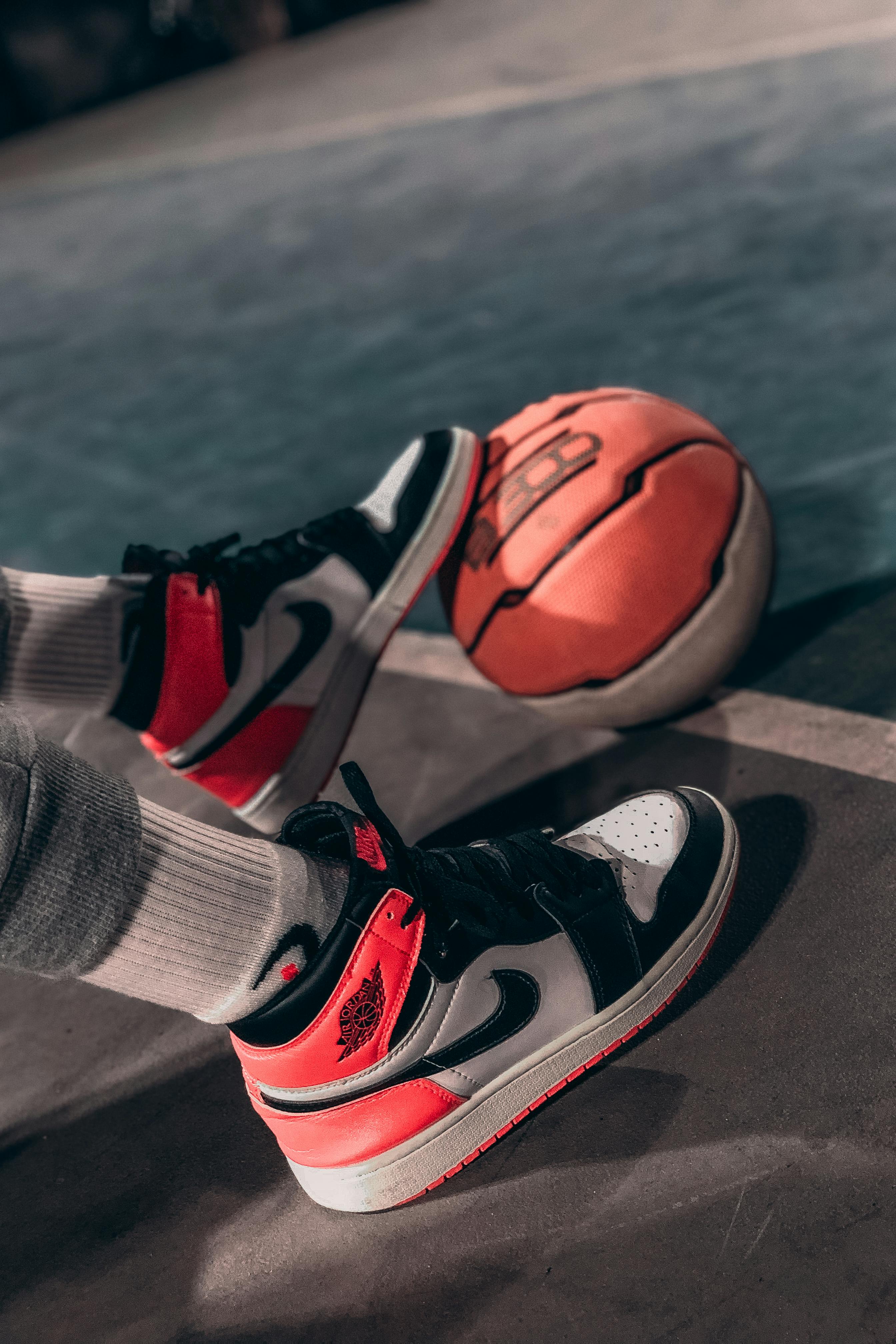
High-top air jordan Air Jordans reach 2 to 3 inches above the ankle, forming a tight collar that limits ankle rolling during intense cuts, pivots, and jumps. Silhouettes like the Air Jordan 1 High and Air Jordan 12 employ padded collars combined with rigid heel counters to lock down the ankle and foot during competitive play. According to a 2024 study published in the British Journal of Sports Medicine, high-top basketball sneakers reduced the frequency of ankle injuries by approximately 28 percent compared to low-profile models in non-professional athletes. Low-top Jordans, such as the Jordan 1 Low and Jordan 11 Low, trade off some of that structural support in trade for lighter weight — frequently shaving 50 to 80 grams per shoe. For pick-up players who hoop casual games once or twice a week, that weight reduction translates into faster first steps and lower exhaustion over prolonged play. The trade-off is real, though: if you have a track record of ankle sprains, a high-top sneaker with proper lacing stays the wiser choice for any on-court activity.
Daily Wearability
Outside of basketball, ease needs shift dramatically, and low-cut Jordans often win out. The lower collar height removes the irritation that high-tops can cause against the Achilles tendon during all-day wear. Many owners note that Jordan Lows feel comfortable after just two or three uses, while high-cut versions may need five to seven wears before the ankle padding completely breaks in. Cushioning technology continues to be the same across both heights — the Air Jordan 1 features the same Air sole unit irrespective of height, and the Jordan 11 retains its full-length Air unit in both iterations. Temperature is another important element: low-cut models allow significantly more airflow around the ankle area, rendering them the go-to choice for warmer months when overheating turns into an problem. For fall and winter or extended periods of standing, the insulation delivered by a high-top collar can in fact be an advantage, trapping warmth trapped around the joint.
Style Impact and Outfit Flexibility
From a style perspective, high-top Air Jordans attract eyes and function as a statement piece in any outfit. The Air Jordan 1 High, in editions like Chicago, Bred, and Royal, consistently ranks among the most photographed kicks on social media, producing millions of tagged posts on Instagram alone. High-top models pair best with skinny or tapered jeans, joggers, and athletic shorts that permit the full shape to be on display — concealing a high-top under wide-leg pants negates its design intent. Low-cut Jordans, on the other hand, provide a sleeker shape that works effortlessly with a larger selection of looks, including regular-fit jeans, khakis, and even dressed-up trousers. Style-conscious sneakerheads in 2026 commonly wear low-cut models as a versatile option that spans streetwear and business-casual settings. The versatility factor grants low-tops a marginal upper hand for shoppers who desire a one pair to cover multiple dress codes throughout the week.
Color and Fabric Differences
High-top Air Jordans commonly include more surface area, which allows design teams to integrate multiple color blocks and contrasting materials across the top section. This additional surface area is why legendary colorways like the Jordan 1 High “Union LA” and “Travis Scott” partnerships look so design-dense — there is simply more room to employ. Low-cut models shrink that same design language into a smaller canvas, which can either look cleaner or seem crowded depending on the release. Leather, nubuck, suede, and patent leather all feature across both formats, though premium materials usually be used more frequently in high-top special editions. In terms of toughness, the extra fabric on a high-top means slightly more coverage against scratches around the ankle area. Purchasers prioritizing preserving their Jordans fresh for years regularly choose high-cut models for this real-world factor alone.
High-Top vs Low-Top: Full Comparison
| Feature | High-Top Air Jordans | Low-Top Air Jordans |
|---|---|---|
| Ankle Stability | Excellent — wraps above ankle bone | Low — rests under the ankle bone |
| Typical Weight | 400–500 g per shoe | 340–420 g per shoe |
| Best Season | Fall / Winter | Spring / Summer |
| Fashion Versatility | Streetwear, sporty | Streetwear, casual, smart-casual |
| Time to Break In | 5–7 wears | 2–3 wears |
| Resale Markup | Generally higher | Moderate |
| Airflow | Moderate | Good |
| Average Retail Price | $170–$200 | $130–$170 |
Resale Worth and Investment Potential
In the secondary market, high-top Air Jordans have consistently attracted steeper markups than their shorter equivalents. Sales data from StockX reveals that the Air Jordan 1 High OG posts a 40 to 60 percent premium over retail in desirable editions, while the Jordan 1 Low OG typically posts a 15 to 30 percent price increase. Ultra-limited high-tops, particularly those associated with collabs with fashion figures like Virgil Abloh or Travis Scott, have reached secondary market prices topping $2,000 in brand-new condition. Low-tops are starting to bridge that divide, however, as Jordan Brand puts more resources in dedicated low-top drops designed for lifestyle consumers. The Travis Scott x Air Jordan 1 Low Reverse Mocha, for example, commanded far above $1,500 on resale platforms throughout 2023 and 2024. For investors focused on long-range returns, high-top models persist as the more reliable choice, but the Jordan Low market is growing fast and should not be overlooked.
Which One Should You Choose?
Your selection at the end of the day depends on how and where you intend to use your Air Jordans. If playing ability is a priority — even at a pick-up level — the protective features of a high-top are undeniable, and the added ankle support can prevent ankle injuries that would bench you for weeks. For casual everyday styling across multiple contexts, a low-top Air Jordan gives unparalleled adaptability, lighter weight, and an quicker break-in period that fits right into a fast-paced lifestyle. Price-sensitive shoppers will also welcome that low-tops typically sell for $20 to $40 less than their high-top counterparts, making the most of your shoe budget more. If possible, a complete rotation features at least one of each: a high-top for making a statement and colder months, and a low-top for casual warm-weather rotation. Take stock of your existing wardrobe, evaluate your activity level, and think about your climate before deciding. Whichever format you select, you are purchasing a model built on over 40 years of sneaker innovation from Jordan Brand.
Final Verdict
The high-top versus low-top discussion has no universal winner because both constructions thrive in unique scenarios. High-top Air Jordans offer top-tier ankle support, stronger aftermarket values, and a bolder visual presence that dominates streetwear photography and sneaker culture events. Low-top Air Jordans offer reduced weight, faster adjustment times, more expansive fashion versatility, and a more accessible retail price for entry-level sneakerheads. In 2026, Jordan Brand keeps on push boundaries across both formats, launching new midsole tech and recycled materials that improve both options year over year. The wisest move is to assess each release on its unique qualities rather than enforcing a rigid preference for one style over the other. Whether you rock high-tops for a weekend convention or slip into lows for a summer cookout, the Jumpman logo on your foot bears the same iconic significance.


Add a Comment